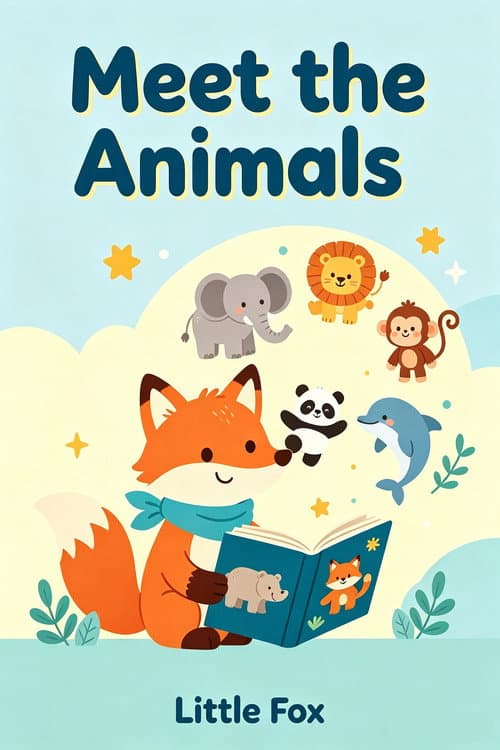

Meet the Animals is an animated educational series created by Little Fox, designed to introduce young learners to wildlife from around the world. Each episode focuses on a different wild animal, using real photos and simple, easy-to-understand sentences to teach fun facts about where they live, what they eat, and what makes them special. The series features a question-and-answer style that makes learning interactive and engaging. With over 60 episodes, each about 3 minutes long with subtitles, it is an excellent resource for children to practice English while exploring the natural world
1. Great White Shark
The dialogue introduces a great white shark, one of the largest fish on Earth. It lives in the ocean and prefers cool water. Although it can be dangerous, it does not usually attack people—in fact, humans often hunt them. The shark eats fish, sea lions, dolphins, and turtles. It is an amazing hunter with a keen sense of smell, able to detect prey from far away. It has about three hundred sharp teeth and uses its long, powerful tail to swim very fast through the water.
2. Mountain Gorilla
The dialogue introduces a mountain gorilla, the largest kind of ape. It lives in the forests of Africa’s mountains. Gorillas make many sounds—they hoot and roar when angry, and growl softly when happy. They mainly eat plants, including stems, roots, leaves, and tree bark. Their main enemy is humans, who hunt them and destroy their habitat, though some people also work to protect them. Gorillas do not live alone; they stay in groups. The leader of the group is the silverback, the oldest male, who makes decisions for the group. At the end, the silverback calls, and the gorilla says goodbye.
3. Nile Crocodile
Here’s a concise English summary of the dialogue: --- The dialogue introduces the Nile crocodile, one of the largest reptiles on Earth. It lives mostly in Africa, preferring warm swamps, rivers, and marshes. It has more than sixty sharp teeth, but it cannot chew—only bite. Its strong jaws open very wide, allowing it to eat fish, turtles, crabs, zebras, hippos, and sometimes even people, making it very dangerous. Despite this, Nile crocodiles are unusually caring parents among reptiles, fiercely protecting their eggs. They swim using powerful tails and keep their eyes and ears above water to see and hear well.
4. Cheetah
5. Grizzly Bear
6. Gray Wolf
7. Great Horned Owl
8. Walrus
9. Octopus
10. Manta Ray
11. Great Blue Heron
12. Raccoon
13. Siberian Tiger
14. Rattlesnake
15. Peregrine Falcon
16. Giraffe
17. Black Widow Spider
18. Flying Fox
19. African Elephant
20. Eastern Box Turtle
21. Ladybug
22. Porcupine
23. Flamingo
24. Garden Snail
25. Beaver
26. Giant Panda
27. Red Kangaroo
28. Hippopotamus
29. African Lion
30. Zebra
31. Koala
32. Skunk
33. Red-Eyed Tree Frog
34. Land Hermit Crab
35. Camel
36. Emperor Penguin
37. Parrot
38. White Rhinoceros
39. Sea Otter
40. Cottontail Rabbit
41. Manatee
42. Turkey Vulture
43. Baboon
44. Monarch Butterfly
45. Grasshopper
46. Polar Bear
47. Ostrich
48. Bottlenose Dolphin
49. Brown Pelican
50. Sea Lion
51. American Alligator
52. Groundhog
53. Red Fox
54. Moose
55. Humpback Whale
56. Green Iguana
57. Clown Fish
58. Wild Turkey
59. Giant Anteater
60. Dragonfly
61. Sea Horse
62. Hammerhead Shark
63. Episode 63
64. Episode 64
65. Episode 65
66. Episode 66
67. Episode 67
68. Episode 68
69. Episode 69
70. Episode 70
71. Episode 71
72. Episode 72
73. Episode 73
74. Episode 74
75. Episode 75
76. Episode 76
77. Episode 77
78. Episode 78
79. Episode 79
80. Episode 80
81. Episode 81
82. Episode 82
83. Episode 83
84. Episode 84
85. Episode 85
86. Episode 86
87. Episode 87
88. Episode 88
89. Episode 89
90. Episode 90
91. Episode 91
92. Episode 92
93. Episode 93
94. Episode 94
95. Episode 95
96. Episode 96
97. Episode 97
98. Episode 98
99. Episode 99
100. Episode 100
101. Episode 101
102. Episode 102
103. Episode 103
104. Episode 104
105. Episode 105
106. Episode 106
107. Episode 107
108. Episode 108